June 26, 2025
Web
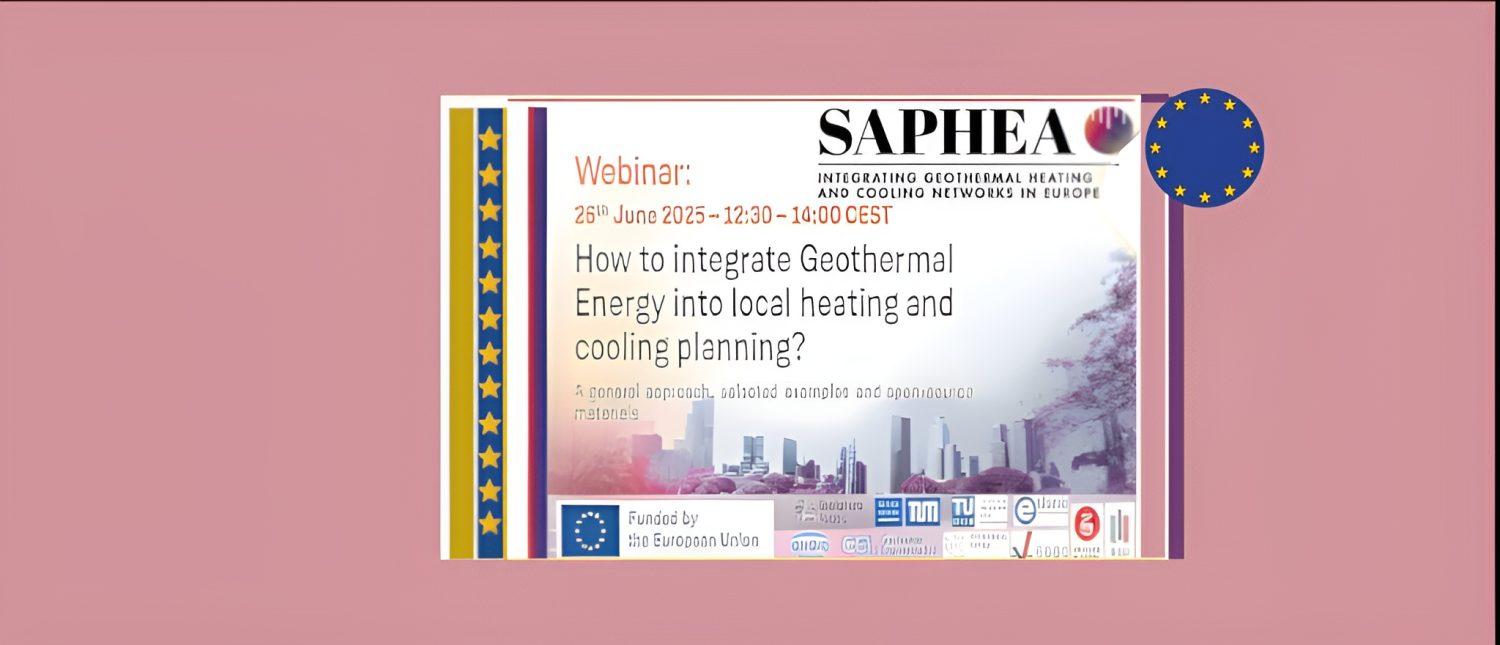
Representatives of the Association EPEKA., Soc. Ent., will participate in the SAPHEA webinar: How to integrate geothermal energy into local heating and cooling planning?
Heating and cooling (H&C) planning is about to become mandatory across EU soon, at least for municipalities with more than 45 000 inhabitants (recast EED 2023). The aim is to develop strategies and measures to decarbonise H&C systems in the cities using a combination of efficiency increase, different renewable energies and waste heat. While different types of geothermal energy might play an important role in the decarbonisation of H&C in cities, the assessment of their role and importance is still more difficult than for other renewable energy sources.
The aim of this webinar is to show the variety of options to integrate geothermal energy into H&C networks, how geothermal energy can be integrated into local H&C planning activities in exemplary cities, and to showcase available open-source materials to be used in local H&C planning.
Programme:
12:30 – 12:40 – The potential role of geothermal energy for decarbonising H&C in cities
Stefan Hoyer, Geosphere
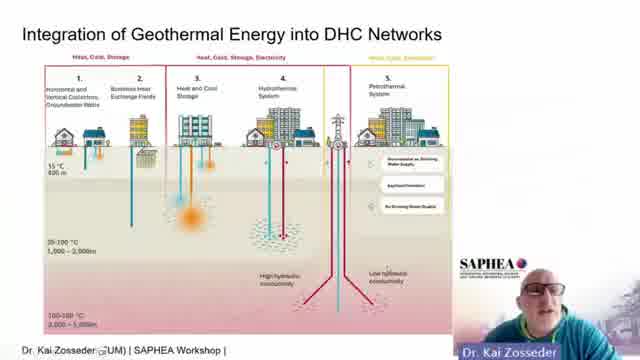
12:40 – 13:00 – Options for integrating geothermal energy into H&C networks
Kai Zosseder, TU München
13:00 – 13:30 – Integration of geothermal energy in H&C planning – selected examples
München, Fabian Böttcher, City of München
Wien, Herbert Hemis, City of Wien
Bruxelles, Gilles Maes, Bruxelles Environment
13.30 – 13.45 – Open-source materials available to be used in local H&C planning
Marcus Hummel, e-think
13:45 – 14:00 – Interactive discussion
Moderation: Marcus Hummel, e-think energy research, Austria
Screenshot of the webinar:
The Association EPEKA, Soc. Ent., continues its activities within the project EPEKA – Housing Cooperative for All. The solution we are addressing in this project is tackling the housing issue through cooperative housing. Housing cooperatives already offer a suitable approach to resolving the housing crisis, as they exist in numerous cities and regions across Europe. These cooperatives come in various forms and sizes—some consist of just one building that is collectively owned by a group of people.
POGLEJTE TUDI
You Might Also Like