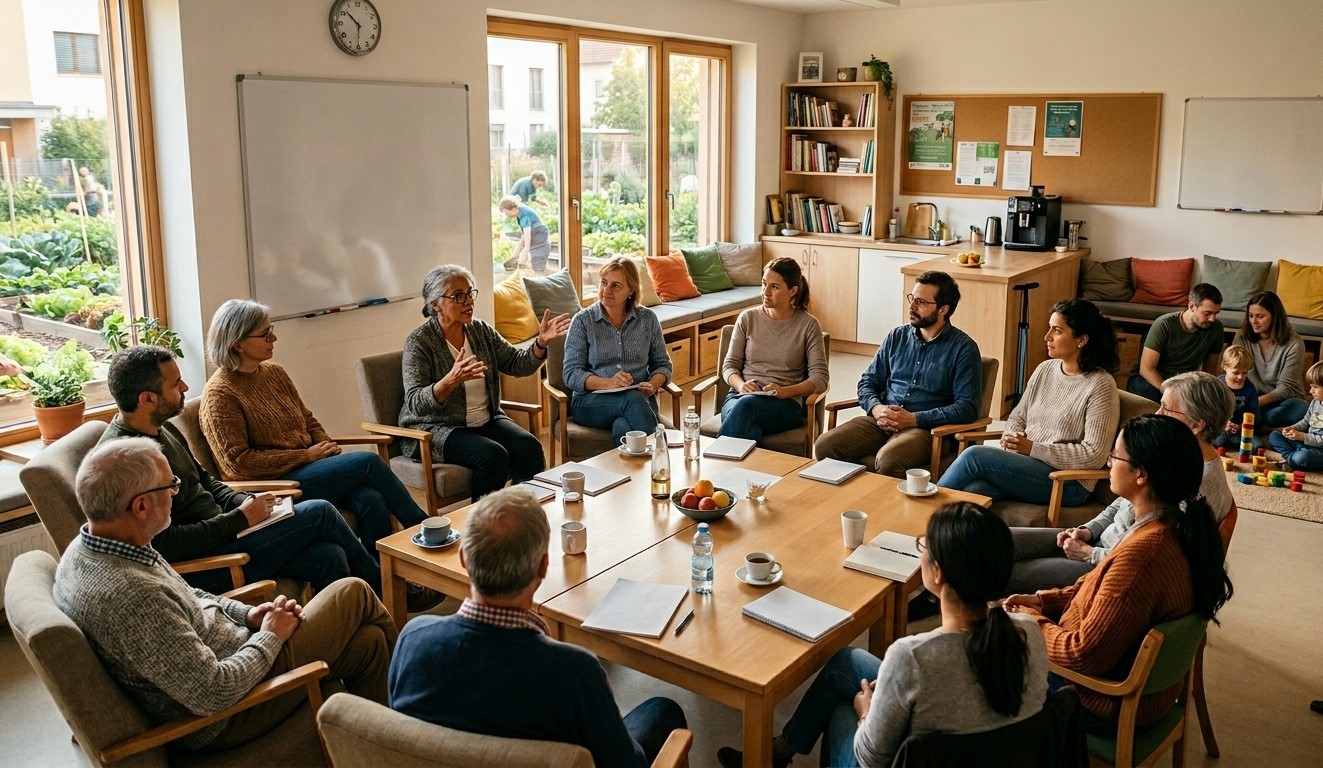
A housing cooperative is not just a building; It is a living organization formed by people. When you move into a cooperative apartment, you don’t just buy a living space, you become part of a community based on cooperation, equity, and shared management. But how to ensure that such a system works in practice?
Decision-making: Democracy at work
In a cooperative, every member counts. The key mechanism is democratic decision-making, where the principle of “one member, one vote” generally applies, regardless of the size of the apartment or the capital investment.
- General Meeting: The highest body of the cooperative where strategic decisions are made (e.g. financial plans, large investments).
- Consensus vs. majority: Many cooperatives tend to reach consensus, which takes more time, but builds a stronger commitment of members to the decisions made.
Rights and obligations of members: Balance of responsibilities
Clearly defined rules are key to long-term harmony.
- Rights: Members have the right to a safe and long-term rental of housing, the use of common areas and a say in the fate of the cooperative.
- Responsibilities: This includes regular payment of rent and operating costs and active participation in management (e.g. membership of committees, care of common areas).
Conflict resolution: Constructive through dialogue
Where people live, there is friction. Cooperatives have an advantage in this because they have predetermined mechanisms for resolving conflicts:
- Mediation: Instead of expedited court proceedings, cooperatives first use internal mediation, where neutral members help to resolve the dispute.
- Transparency: Most disputes stem from vague expectations. Therefore, regular and open communication between members is crucial.
Community Life: More Than Just Neighbors
The heart of the cooperative is the quality of life, which you will not find in an ordinary apartment block.
- Informal Help Network: Babysitting, helping elderly neighbors, or sharing tools – these are the little things that build a safety net.
- Joint activities: Organizing events, arranging gardens or joint workshops strengthens belonging. This is what turns a building into a real home.
Life in a cooperative requires a certain degree of willingness to engage in dialogue and work for the common good. But the reward is priceless: a sense of security, belonging and accessible living in spaces that you co-design.
Participation is free, the number of places is limited – register as soon as possible!
Registration and information: epeka@epeka.si
Where? EPEKA Association, Tyrševa ulica 15, Maribor, at 16.00
The EPEKA Youth Programme is co-financed by: the Youth Office of the Republic of Slovenia and the Municipality of Maribor




POGLEJTE TUDI
You Might Also Like