In May, EPEKA members will attend an event organised by the European Commission as part of the Energy Poverty Advisory Hub (EPAH).
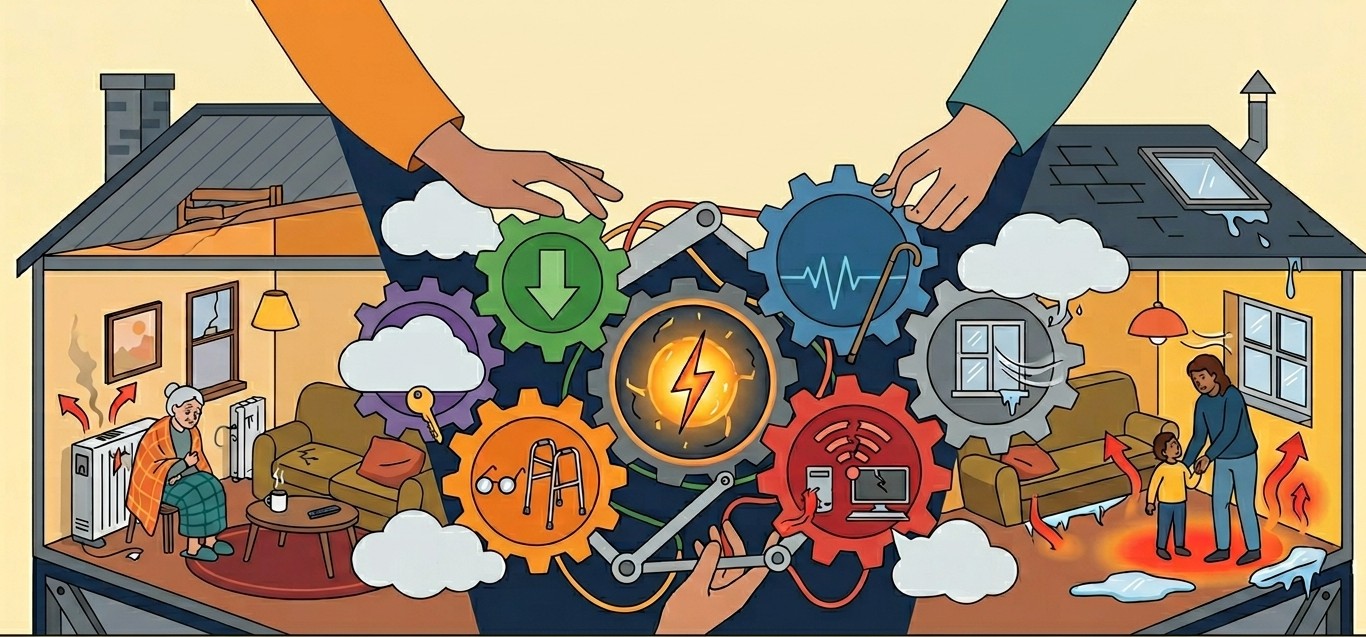
Energy poverty is a complex challenge that cannot be solved by technical repairs to buildings or one-off financial assistance alone. In the latest in a series of online talks under the auspices of the Energy Poverty Advisory Hub (EPAH), experts will discuss the concept of “interlocking vulnerabilities”.
More than just low incomes
The main message of the event is: if we want to eradicate energy poverty, we need to understand how different personal and social factors intertwine. An interdisciplinary approach reveals that an individual’s distress is determined not only by the thickness of their wallet, but by a combination of factors:
- Health status: Chronically ill and disabled people often need more stable temperatures, which increases their energy dependence.
- Age and isolation: Senior citizens are more likely to face shame in seeking help or are digitally excluded from more affordable energy services.
- Housing status: Tenants have limited power in the energy rehabilitation of buildings, which pushes them into a vicious circle of high costs.
Reflections from practice: What works in the field?
Instead of a dry theory, the speakers will serve concrete examples from local environments across Europe:
- Overcoming stigma: Many households in need do not ask for help out of pride or distrust of institutions. Successful projects are those that offer help through trusted local actors (e.g. patronage services, local associations).
- Sector integration: The solution lies not only in energy. Cooperation between energy consultants, social workers and healthcare staff is key.
- Face-to-face data: Effective local strategies combine hard data on energy consumption with soft information about the social needs of residents.
A path to a just green transition
The event will serve as an important reminder for policymakers at all levels. To achieve the EU’s Just Transition objectives, we need to create systems that are flexible and accessible to everyone, regardless of their digital literacy or property ownership status.