Sign up for the next in a series of workshops led by architect and lecturer Urban Žunko. This time we will review the historical concept of cooperatives and its development.
What exactly are housing cooperatives and why have they become so successful abroad? In this post, we take a walk through their history and look at examples that prove that cohabitation can be the answer to housing dears.
What is a housing cooperative?
A housing cooperative is a non-profit organization founded by the residents themselves. The main difference between classic rental or purchase is ownership: the property is not privately owned by an individual or a speculative investor, but owned by a cooperative. Members of a cooperative are both its co-owners and residents, which ensures permanent security of living and control over costs.
Historical context: From the Industrial Revolution to the present day
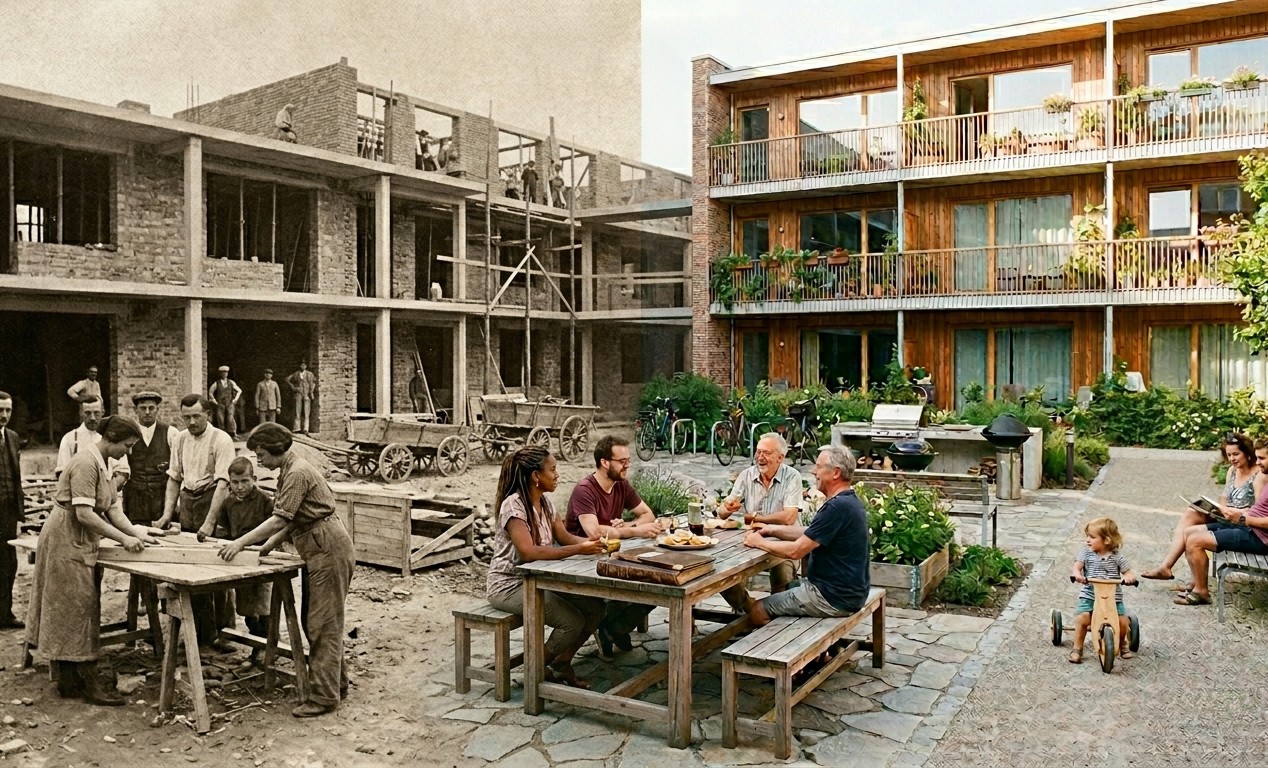
The cooperative model is not new. Its beginnings date back to the 19th century, a time of rapid industrialization and urbanization:
- Beginnings (19th century): The first cooperatives were formed as a response of the working class to inhumane living conditions and extortionate rents in fast-growing cities. The first officially registered housing cooperative in Europe was founded in Manchester (United Kingdom) in 1844.
- Golden age (post-World War II): Cooperatives have been recognised by many European countries as key to urban renewal and the provision of affordable housing for all sections of the population.
- Modern revival: In recent years, we have witnessed the “third wave” of cooperatives. Not only affordability, but also community life, energy efficiency and the democratization of space are coming to the fore.
Why do we need housing cooperatives?
- Affordability: Because cooperatives do not make a profit for outside shareholders, rents are significantly lower than market rents.
- Safety: Co-operatives are not exposed to the whims of landlords or sudden rent increases.
- Community: The architectural design encourages socializing (communal kitchens, terraces, workshops), which reduces the feeling of loneliness.
- Sustainability: Greater responsibility towards the common property often leads to better energy efficiency and long-term maintenance of facilities.
Participation is free, the number of places is limited – register as soon as possible!
Registration and information: epeka@epeka.si
Where? EPEKA Association, Tyrševa ulica 15, Maribor, at 4.30 p.m.
The EPEKA Youth Programme is co-financed by: the Youth Office of the Republic of Slovenia and the Municipality of Maribor




POGLEJTE TUDI
You Might Also Like