Sign up for the next workshop in the series, which will be led by architect and lecturer Urban Žunko.
A housing cooperative is not just a group of people sharing costs; It is a community that builds a space tailored to people. When we talk about planning a cooperative neighborhood, we are not just planning walls and roofs, but a framework for living. What key factors do we need to pay attention to in order for a neighborhood to become a home where people feel connected and safe?
Location selection: More than just square meters
Location is the foundation of any real estate project, but in cooperatives it has additional weight. We are looking for micro-locations that allow:
- Accessibility: Proximity to public transport, bicycle paths and basic infrastructure (shops, schools, health centers).
- Inclusion in the environment: A cooperative neighborhood should not be an “island”, but part of an existing neighborhood that enriches the local community.
- Potential for development: Land that allows for phased construction or expansion is often the best long-term choice for cooperatives.
Architectural design: Adapted to the community
Architecture in cooperatives follows the needs of residents, not maximizing profits.
- Flexibility: The apartments are designed in such a way that they can adapt to the needs of the family over time (e.g. transitional rooms, modularity).
- Involvement: Members of the co-op are involved in the design process from the beginning, ensuring that the space actually reflects their lifestyles.
Common Areas: The Heart of Cooperative Life
Common areas are what distinguish a cooperative from a regular apartment block. This is where trust and neighborly help are built. When planning, we must not forget about:
- Multifunctional spaces: From shared kitchens and dining areas for celebrations, to remote work spaces or children’s playrooms.
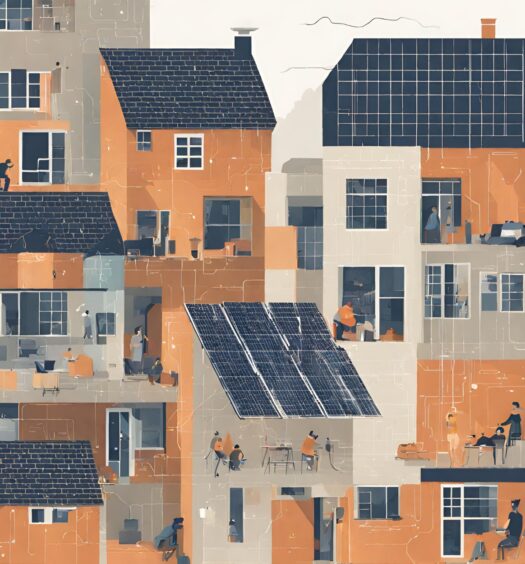
- Outdoor gathering spaces: Communal gardens, atriums, or rooftop terraces promote contact between generations.
- Commercial common areas: Communal laundries, repair shops or bicycle storage rooms reduce the need for private square metres and thus lower the price of housing.
Sustainable Building: Responsibility for the Future
For cooperatives, sustainability is not just a trend, but a way to reduce operating costs in the long term.
- Energy efficiency: Passive construction, the use of heat pumps and solar power plants on roofs drastically reduce monthly heating and electricity costs.
- Natural materials: The use of wood, natural fibre insulation and quality materials ensures a healthy living climate.
- Circular economy: Planning with long-term maintenance in mind and easy recycling of materials at the end of a building’s life.
Building better together
Planning a cooperative neighborhood is a process that requires time, conversation, and vision. When architecture is combined with the idea of community, we get more than just apartments – we get spaces where people feel accepted and safe.
Participation is free, the number of places is limited – register as soon as possible!
Registration and information: epeka@epeka.si
Where? EPEKA Association, Tyrševa ulica 15, Maribor, at 4.30 p.m.
The EPEKA Youth Programme is co-financed by: the Youth Office of the Republic of Slovenia and the Municipality of Maribor